1: a herring cured by salting and slow smoking to a dark brown color
2 [from the practice of drawing a red herring across a trail to confuse hunting dogs]
: something that distracts attention from the real issue
*https://www.merriam-webster.com
I remember seeing Scream in the theaters back in late December 1996. Scream was unlike any other horror film I had seen at that time. Meta-fiction, parody, and satire were new to me, so hearing characters make references to other movies and popular culture enthralled me as wholly original.
However, as perfect as Scream still is, watching with a more critical eye has awakened me to one specific scene that unfortunately makes me question its magnificence.
Meta-Fiction Done Right
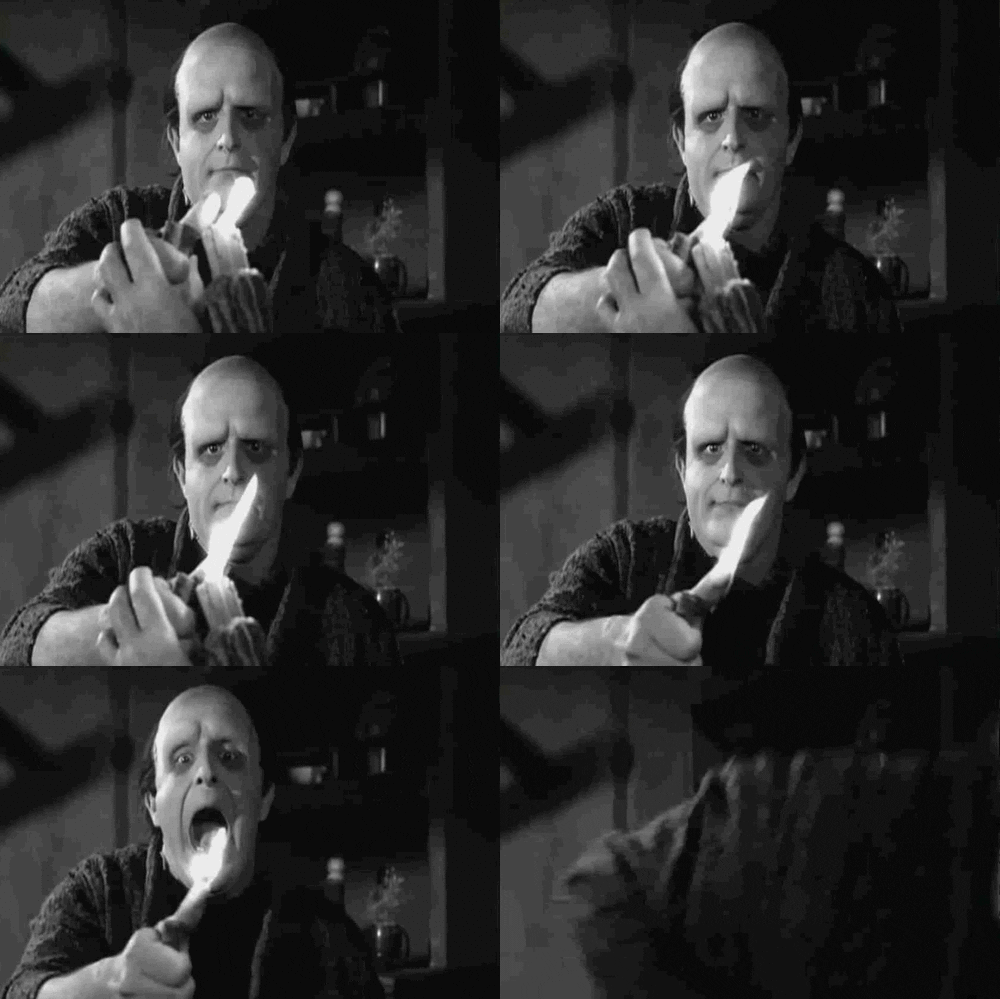 |
| Young Frankenstein |
In retrospect, Scream was inevitable. Eventually, someone was to make a movie spoofing other horror films. Movies like Young Frankenstein (1974), Abbott and Costello Meet Frankenstein (1948), The Monster Squad (1987), and countless more already had existed, so the concept of making fun of something popular was not new. But the primary reason why Scream stands out from all others was its incorporation of technology. The cell phone boom was taking off during the mid-90s and writer Kevin Williamson wisely used it as a gimmick. (Note: only the killer—not the victims—used cell phones.)
A Cut Above the Rest
The Ghostface character, though similar to other antagonists, was vastly different than the most popular slasher villains of the generation. Whereas silent stalkers like Halloween’s Michael Myers and Friday the 13th’s Jason Voorhees calmly walked forward, blade-in-hand, ready to dice victims, Ghostface rightly borrowed traits from legendary villains before him and charged his target.
 |
| Ghostface |
Ghostface breathed new personality into the stock-killer character, and more importantly, did so by bridging contact with his victims by using technology each time. Ghostface, during his reign in the late 90s, was the new and improved poster boy of horror movie slasher villains.
The Disappointment of Red Herrings (Spoilers ahead!)
Everything aside, including one of the most memorable whodunit-reveals in any movie, there is one scene that possibly should have been omitted or written differently.
Scream, more often than not, tells the story from Sydney’s perspective, which means, we, the audience, see what she sees. We are trying to solve the mystery as the story unfolds, and we are trying to solve it before Sydney.
After Sydney and Billy finally copulate, Billy is slaughtered. Sydney sees him die, which means we—the viewer—see him die. It should also be expressed that once Billy is stabbed by Ghostface, he specifically turns to Sydney as if to call for help. His over-the-top death here exudes such blatant exaggeration that it is almost as if the filmmakers are suggesting to Sydney (to us) that it is truly nonsense. And, worse, it forces us now to dismiss him from the list of possible killers.
 |
| Red Herring |
Red herrings, when done right, work, but not often. As critically acclaimed as Scream is (and rightfully so), it is an outright insult to the audience to give false information, which then voids any clues we have to answer the riddle. Scream 3 incorporates the same technique in its finale. This trickery (or is it abuse?) of storytelling is nothing new, however. Dating back to Agatha Christie’s best-known work, the mystery novel, And Then There Were None, uses two people involved in the murders. One fakes his death to fool the rest, making it impossible for the reader to solve the case until the killer admits his connection.
I think the majority of people who watch horror movies may not examine them in this way. I wish I still did, too, as Scream was the last official entry in the slasher genre worthy of respect.
Tech is Too Advanced
 |
| Scream 4 |
The successful slasher movies of the 80s existed because it didn’t have the countless outlets of communication that the world has today. Camera phones are everywhere. You can send text by speech. You can have video conferences from thousands of miles away. Social media has infiltrated our lives.
The slasher film as we know it cannot compete with such devices. It needs a certain amount of isolation to work. I doubt the slasher genre will return. If it does, it will be in some soft, unrecognizable form that will not entertain those of past generations.

No comments:
Post a Comment